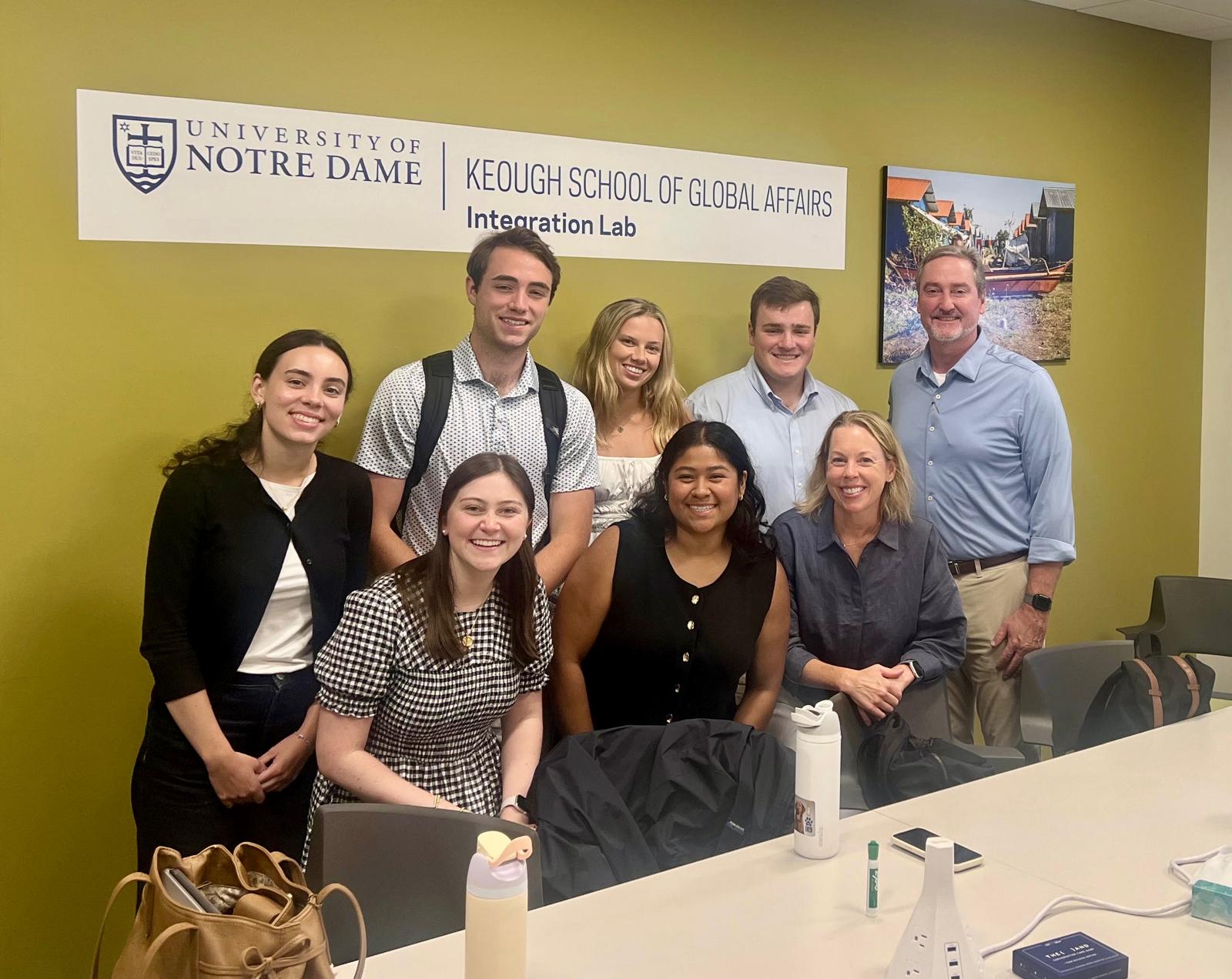
The Vines Foundation’s partnership with the University of Notre Dame has grown alongside the vocational education project itself.
Across nine Global Affairs Capstone cohorts, Notre Dame students have joined the work at different stages. Early teams helped research what the community needed and what vocational education in the Uco Valley could look like. As the project became more defined, each group was able to take on the questions that came next.
Earlier this year, the Foundation contacted graduates from its 2024 and 2025 vocational programs to learn more about what happened after their courses ended. Thirty-two graduates responded, giving us useful information about their experience after training and helping identify an area that deserves more attention: the transition into employment.
That is where the ninth Notre Dame cohort comes in.
Six senior researchers are now studying workforce-development models, internships, mentoring and employer partnerships in other regions, looking for ideas that could realistically work in Tunuyán and the Uco Valley.
They are not being asked to bring in a ready-made program. Their research will give the Foundation practical recommendations and tools that can then be discussed with employers, educators and community partners who understand the local reality.
This partnership has always moved one question at a time. What we learned in one stage helped define what needed to be explored in the next.
Today, that question is very practical: what needs to happen between finishing a course and finding a real opportunity for work?